Showing posts with label Naturephile. Show all posts

Friday, September 21, 2012

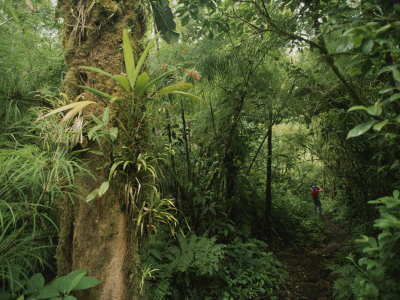
Simple Pleasures Part 3: Heliotransfolium

And see that limning action at the bottom? That's hot.
For those of us to whom ancient Greek roots are "like Greek to me, man", rest easy; it's as simple as sunlight through leaves. We've all seen it, right? That wonderfully alive sort of green glowing with the richness of syrupy golden afternoon sunlight that makes actual, factual gold seem a cold dead facsimile indeed. It is a vision of vibrancy and wealth far past any inert metal, because this is the color of something alive, and in the act of living as hard as it can. The fact that I could find no word for that beautiful sight nagged at me like a toothache. There's no helping it; one had to be made. Introducing:

With helio meaning 'sun' and trans meaning 'through', and foli of course meaning 'leaves', barring any grammatical or syntactic crosscultural differences, this should be seen as a legit word; in that it successfully communicates its message, at least. However, I totally made this up in  a few minutes by Googling ancient Greek roots, so if you see any hitches in my giddyup, please let me know. And, until proven otherwise, enjoy your new word! Just in time for Fall, too; am I good, or am I good? You're welcome.

Thursday, April 21, 2011

Sometimes Reality Blows My Mind

I am a fiction writer. But as Richard Feinman said, "I think Nature's imagination is so much greater than man's....she's never gonna let us relax." The constant striving to survive against whatever odds has led to outlandish extremes of life, and even as a fictionalist, without proof I could never have lent credence to these real-world phenomena:


The Blue Hole of Belize is one of the world’s most recognizable natural wonders. It's found in Belize's Barrier Reef Reserve System, about 60 miles away from Belize City. It is believed that this hole is the world’s largest sea-hole. It is about 125 meters deep and it's about a quarter of a mile in diameter. It was created by the collapse of a limestone cave system when ocean level began to rise again after the the last Ice Age -- the caves flooded, and the roof collapsed into this beautiful deep-sea pit. It's now a prestigious advanced dive-spot, with crystal-clear waters, a constant 73 F temperature year-round, and many impressive aquatic species, including giant groupers, nurse sharks and several types of reef sharks such as the Caribbean reef shark and the Blacktip shark. There have also been irregular sightings of other species of sharks, like the bull shark and hammerheads. It is a place of implacable beauty and danger, and in my mind the elemental balance to the next phenomenon I wanted to share:

The fire-pit at Darvaza is a gas crater which has been flaming for nearly 40 years. During its time under the rule of Soviet Russia, Turkmenistan had geologists conducting gas drilling in Kara-Kum desert in 1971 when an underground chamber was discovered close to the village of Darvaza (known in Turkmen as Derweze, but sometimes also referred to as Darvaz). The discovery of the chamber was accidental and resulted in the drilling rig collapsing, leaving a massive crater filled with toxic gases fuming out into the open air. The concentration of gases within the crater was so dense no one dared approach it. It was then that someone came up with an idea to light the gas in the crater on fire so as to burn it before the poisonous fumes engulfed the nearby town of Darvaza. The geologists decided to burn the gas off with a controlled detonation. As it turns out, the supply of quality natural gas below the crater is near infinite, as the crater’s been burning uninterrupted ever since.

But not all my mind-blowing phenomena are geological, lawsy no; our flora-fauna synergy is amazing as well.

Cool story brought to my attention c/o of Ariadne @
http://ariadne-imaginationwithouttaste.blogspot.com/2011/04/mostly-dead.html
With over 1/5 of Pakistan underwater after a heavy flood, millions of spiders climbed into trees to escape the rising floodwaters. The water took so long to recede that the trees became cocooned in spiderwebs. The result is this surreal fantasy landscape, with any vegetation covered in a thick mass of gauzy spiderweb.
This bizarre turn of events may be a blessing in disguise, as Britain’s department for international development reports that areas where the spiders have scaled the trees have seen far fewer malaria-spreading mosquitos than might be expected, given the prevalence of stagnant, standing water. This catastrophe may be another lurching step in natural evolution, an event that kick-starts a new habit in insect behavior and a significant change in the region's ecosystem!

For much cooler expansion on this topic,
read Terry Pratchett's Bromeliad Trilogy.

This precious little gem is called the Golden Tree Frog, or Phyllodytes auratus. Found only on one mountain in the world, in Trinidad, it lives and breeds exclusively in only one type of giant bromeliad that grows high up in the canopy layer of the trees there. Visiting herpetologists found gold-striped tadpoles only in the bromeliads that had a single adult frog present, suggesting the parent may care for their tadpoles in much the same way as poison-dart frogs do -- by guarding and feeding them on unfertilized eggs. The frog lives in flowers that have been filled with water during a rainshower and will spend its entire life in a single flower; when they die they sink to the bottom and release nutrients into the water, allowing both the bromeliad and other frogs to glean their nutrients for survival. What an amazing, closed little universe, in the center of a flower atop a tree atop one lone mountain on an island, far far away. This may be more mind-blowing to me than fire pits or mile-deep shark tubes. A universe within a universe, like suds inside a larger bubble just floating in the sky.

How would those little frogs feel if they looked out of their bromeliad universe, to the outer petals and to the branch extending into an incomprehensibly larger world? And how would we feel if our furthest deep-space satellites sent back images of massive petals, hinting at something even larger beyond?